
- Crunch
- Global

Despite being published in 1949 at the tail end of World War II, I think George Orwell’s fictional novel, 1984, is still as relevant today as it was back then.
The book is set in the fictional state of Oceania, where a dystopian future has taken over the reins of society. The leader of the nation, Big Brother, keeps a constant eye on citizens, making sure that they think, act, and speak precisely how they should further the aims of the rulers.
Governed by the Party, the people of Oceania have no form of freedom, not in the way they think, the way they speak, or in what they do.
I believe (and I am not the only one) in the current state of our society, with data collection and the…
Read more on BitcoinMagazine
Web3 has placed so much emphasis on the baseline concept of zero-knowledge technology that it now sits on a pedestal, a spotlight cast over every development. But its scalability, security and privacy benefits do not make it trustworthy by default.
People fail to recognize that zero-knowledge (zk) technology, in a Web3 context, is still fairly new and not without flaws. Developers are actively addressing zk tech’s current issues, but the innovative nature of the space means that they are often conceptualizing faster than they can build.
Continuing to put trust into zk technology without fully understanding its problems is perilous for a sustainable Web3 future. We need to…
Read more on Blockworks

Research and development firm Dfinity Foundation has partnered with artificial intelligence (AI)-focused blockchain firm SingularityNET to improve the infrastructure of decentralized AI and allow decentralized applications (DApps) on the Internet Computer blockchain to access large language models (LLMs).
On Nov. 20, the companies announced the launch of a joint initiative to integrate the ICP blockchain with the SingularityNET marketplace. According to a statement sent to Cointelegraph, the initiative aims to address the lack of transparency in the training data of AI tools because of its centralized nature. The two companies believe decentralizing AI models will make them tamper-proof…
Read more on Cointelegraph
As blockchains scale, the cost of transactions and blockspace falls. The 2022-2023 bear market has been characterized by a continuous build out of infrastructure, to lay the groundwork for future growth.
Yet arguments about the best way to scale abound, they often fall into one of two camps.
One is “modular,” with its standard-bearers Ethereum and Cosmos. The other is “monolithic” which has come to be dominated in the crypto zeitgeist by Solana — although they prefer the term “integrated.”
An essay published Friday by pseudonymous Ethereum advocate Polynya critiquing monolithic blockchains, while not mentioning it by name, has been interpreted by many as a veiled…
Read more on Blockworks
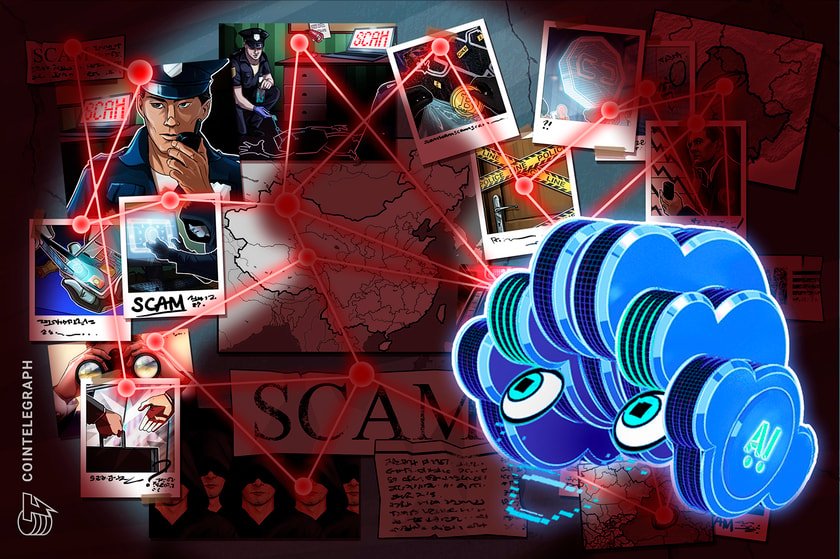
The financial services provider Mastercard revealed a new partnership with artificial intelligence (AI) firm Feedzai, according to reports from CNBC on Nov. 20.
Mastercard says this integration aims to boost its ability to detect and prevent fraud routed through cryptocurrency exchanges.
According to the report, Feedzai will be integrated directly with Mastercard’s CipherTrace Armada platform, a tool for banks to monitor transactions from thousands of crypto exchanges for fraud and other suspicious activities.
Feedzai’s software was built to identify and block suspicious transactions in “nanoseconds” using AI. Data from Feedzai says that nearly 40% of scam transactions go…
Read more on Cointelegraph
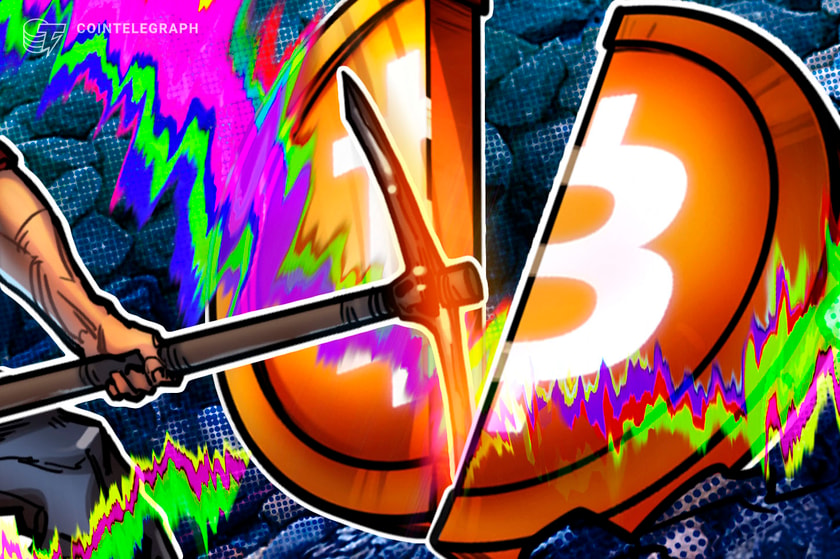
The crypto community and many of its most high-profile players have started to shift their focus toward the Bitcoin halving, a 4-year cyclic event that cuts the Bitcoin market supply in half. With the next halving event scheduled for April 2024, the Bitcoin mining reward will reduce from the current 6.25 BTC per block to 3.125 BTC per block.
Binance CEO Chang Peng Zhao took to Twitter to set the countdown for the next halving in an X (formerly Twitter) post to remind everyone that the next BTC halving event is only 135 days away.
#Bitcoin halving soon. pic.twitter.com/xp4mWyMKkD
— CZ Binance (@cz_binance) November 19, 2023
Historically, Bitcoin halving is also linked to bullish…
Read more on Cointelegraph
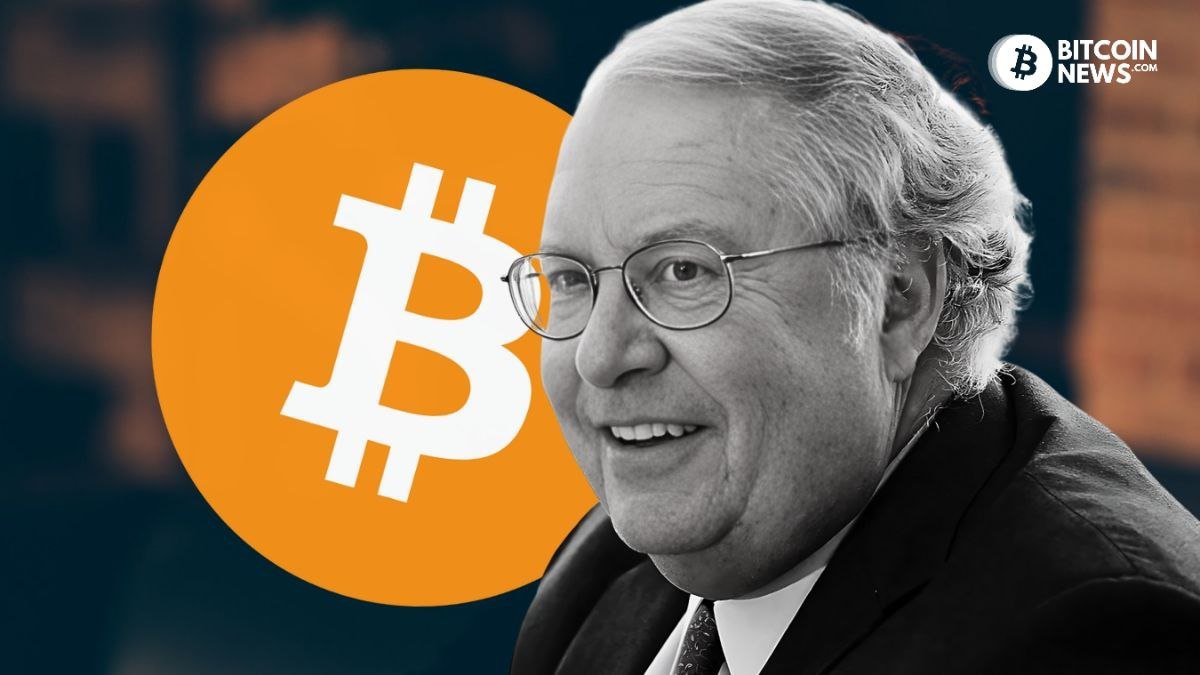
Over his long and successful career, Bill Miller accumulated a personal net worth of $1.8 billion dollars. Compared to the story of Bill Miller net worth, few stories are as compelling as his meteoric rise from modest beginnings to a Bitcoin billionaire.
Born in 1950 in Laurinburg, North Carolina, Miller’s early life was marked not just by financial limitations but by a deep-seated curiosity and a relentless drive. A formative stint in the military and later academic pursuits in economics laid the groundwork for what would become an extraordinary career.
Shaping the Future of Investment
Joining Legg Mason Capital Management Inc. in 1981 was more than a career move for…
Read more on bitcoinnews
BitcoinNews.com is not investment advice.
Opinions expressed are entirely their own and do not necessarily reflect those of BitcoinNews.com
For informational purposes only. Individuals and entities should not construe any information on this site as investment, financial, legal, tax, accounting or other advice. Information provided does not constitute a recommendation or endorsement by BitcoinNews.com to buy or sell bitcoin, cryptocurrencies or other financial instruments. Forecasts are inherently limited and cannot be relied upon. Do your own research and consult a professional advisor. The opinion of authors do not reflect those of BitcoinNews.com
Read more on bitcoinnews
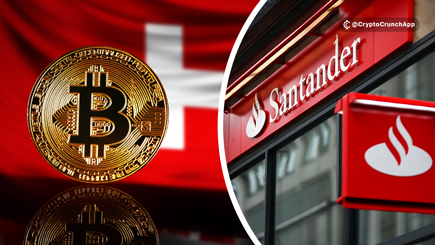
Santander Private Banking International, a division of Banco Santander, has announced that it will provide high-net-worth clients with Swiss accounts access to major cryptocurrencies, including bitcoin (BTC) and ether (ETH). The move aims to cater to growing demand among wealthy individuals for crypto investments. The bank plans to expand its cryptocurrency offerings in the coming months, subject to its screening criteria. Assets will be securely held through a regulated custody model, with private cryptographic keys stored in a protected environment. This bold step sets Santander apart in the financial industry’s approach to cryptocurrencies.