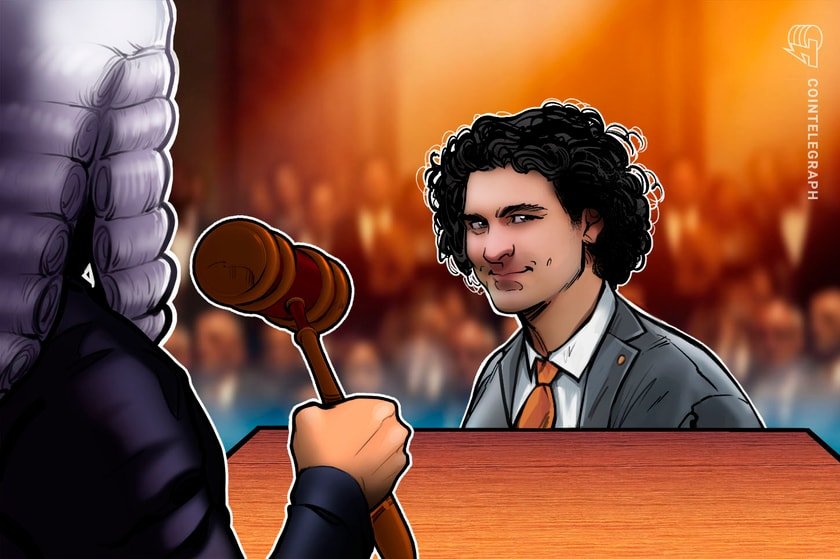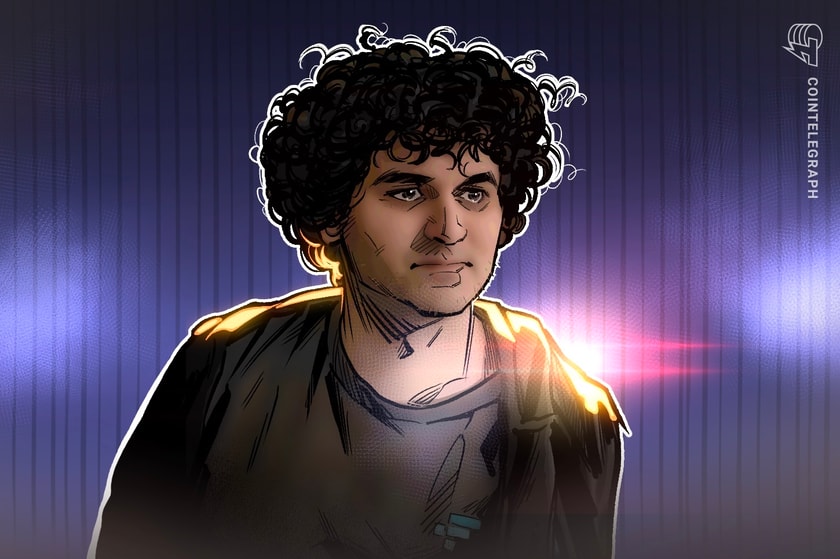
SBF grilled in court on deleted messages during testimony

Disgraced FTX founder Sam Bankman-Fried (SBF) tried to explain his rationale for deleting corporate messages during a closed-door testimony without the presence of the trial’s jury on Oct. 26.

When prompted as to why he started using corporate communications on the encrypted messaging app Signal by prosecutor Danielle Sassoon of the Southern District of New York, SBF claimed that he only did so with the approval of FTX counsel Daniel Friedberg. However, SBF later said that while counsel approved the use of Signal, he never sought prior approval before utilizing the app’s auto-delete feature.

“At some point I remember changing my toggle to one week auto delete,” the former crypto executive…

Read more on Cointelegraph
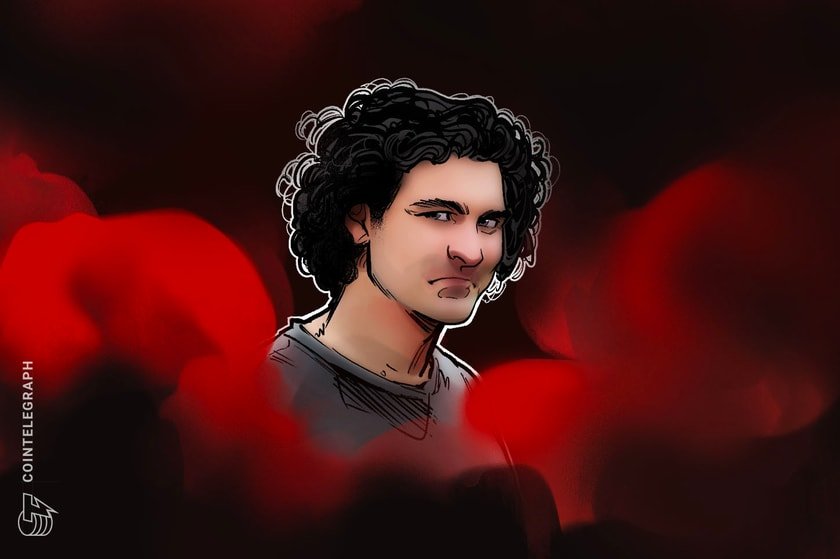
Latest update — Former FTX CEO Sam Bankman-Fried trial [Day 13]

Cointelegraph reporters are on the ground in New York for the trial of former FTX CEO Sam “SBF” Bankman-Fried. As the saga unfolds, check below for the latest updates.

Oct. 26: Prosecutors rest their case

Attendees of Sam Bankman-Fried’s trial on Oct. 26 had a disappointing morning as attorneys from both sides kept an endless cycle of repeated questions, sidebars and objections, prompting District Court Judge Kaplan to interrupt witness testimony and urge attorneys to move forward.

Prosecutors rested their case early this morning after FBI agent Mark Troiano briefly testified as the last government witness. In his analysis, more than 300 Signal groups with Bankman-Fried were examined….

Read more on Cointelegraph

Solana Labs plans to grow ecosystem through new incubator program

Solana Labs has launched an incubator program to help scale startups interested in building on its network.

This incubator program is designed to support teams interested in building on the Solana network by providing engineering and go-to-market support. 

Solana has a total value locked (TVL) of $1.254 billion and around 114 dapps deployed on its network today, according to information on DeFiLlama.

Emon Motamedi, a product manager at Solana Labs, told Blockworks that blockchain development remains a challenge for many startups wanting to build in the space. 

“Whether you are a Web2 founder looking to integrate Web3, a Web3 founder trying to bring your product cross-chain, or a…

Read more on Blockworks

Sam Bankman-Fried thought ‘taking FTX deposits through Alameda was legal’: Report

Former FTX CEO Sam “SBF” Bankman-Fried addressed a New York courtroom under oath without the 12-member jury present.

According to reports from the courtroom on Oct. 26, SBF’s highly anticipated testimony kicked off with defense attorney Mark Cohen questioning the former FTX CEO on his use of the messaging app Signal and retention of communications data at the crypto exchange. Bankman-Fried reportedly claimed he acted in accordance with company policies on records, and none of the media set to “auto-delete” were “channels for decisions.”

“Why did you turn off auto-delete?” Cohen asked Bankman-Fried.“I had heard from regulators,” he replied.

Cohen pressed the former FTX…

Read more on Cointelegraph

LayerZero’s wstETH bridge deployment draws Lido DAO ire

LayerZero recently introduced a bridge token allowing users to move Lido’s $5.5 billion wrapped staked ether (wstETH) token between Ethereum, Avalanche, BNB, and Scroll. 

There was one small problem, however: LayerZero apparently didn’t wait for Lido DAO’s permission before deployment.

LayerZero’s announcement of its omnichain fungible token (OFT) before a DAO vote led some Lido DAO members to feel that the DAO is being strong-armed into approval. While Lido DAO’s power has been a subject of concern lately, one member says the DAO has limited leverage to prevent situations like this one.

LayerZero announced its wstETH standard on Wednesday, and Binance’s BNB chain followed…

Read more on Blockworks

Lummis, Hill push for ‘swift’ DOJ action against Binance, Tether 

Senator Cynthia Lummis and Rep. French Hill penned a letter to US Department of Justice Attorney General Merrick Garland on Thursday.

Hill and Lummis — both of whom have been advocates for crypto — penned the letter following reports that Hamas, and “bad actors,” used Tether and Binance.

Israeli authorities reportedly asked Binance to shutter around 100 accounts tied to Hamas. Tether froze 32 addresses controlled by both Hamas and “Russian-linked entities.” 

The letter cites a report from the Wall Street Journal which is facing controversy after Elliptic — the blockchain analysis firm named in the WSJ report, refuted the figures cited in the article.

The two asked Garland…

Read more on Blockworks

Core devs rule out Dencun fork this year

Ethereum client developers confirmed on Thursday that the anticipated Dencun upgrade will not be implemented in a network hard fork before the end of 2023.

Already last month, when the new Holešky testnet was successfully launched behind schedule, the consensus was that putting the upgrade through its paces by the time December holidays rolled around was unlikely.

When an optimistic scenario was put forward on today’s All Core Developers call, the consensus was evidently with pseudonymous Prysm developer Potuz, who commented, “there is no way we are forking mainnet in 2023.”

He pointed to consistent consensus issues arising on the 10 developer networks (devnets) that have been…

Read more on Blockworks

Crypto reshapes the American dream for younger generations: Report

A new Coinbase report on the state of crypto has revealed the disillusionment of younger generations (Gen Z and Millennials) with the traditional American dream and the financial system. It shows young Americans are more open than older generations to unconventional paths to financial independence, such as crypto, than older generations.

According to the report, young people find the American dream less achievable, partly due to high housing costs, inflation and an outdated financial system. Instead of following conventional paths, they are actively building new models of work, ownership and finance that are more flexible and don’t rely on legacy intermediaries.

Younger generations are…

Read more on Cointelegraph

Ray Youssef: The Ray Narrative

This article is featured in Bitcoin Magazine’s “The Withdrawal Issue”. Click here to subscribe now.

A PDF pamphlet of this article is available for download. 

When I started out as an entrepreneur, I never thought armed men would one day barricade themselves in my office or that my staff would resign because they feared for their lives. But that’s exactly what happened this past January when my co-founder and former COO, Artur Schaback, stormed into our Estonian office with a friend and four armed thugs to demand money.

The first thing Schaback did when he arrived at the office was to demand that our chief of information security (CISO) give company access to Schaback’s friend, a…

Read more on BitcoinMagazine