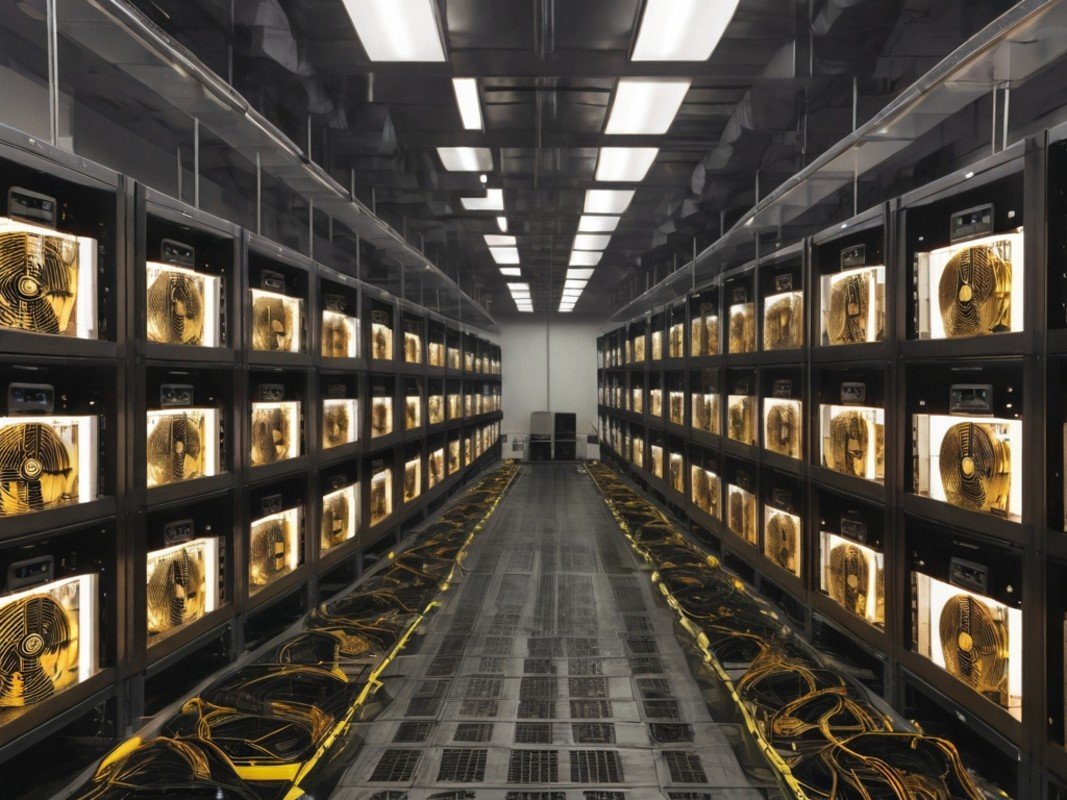
Crypto’s infrastructure bloat — are we building too much?

The growing negative sentiment around crypto’s current infrastructural bloat and absence of consumer applications is reaching a fever pitch.

It’s such a familiar talking point across social media and podcasts that it has largely become a consensus view. Prior cycles saw the innovation of smart contract-enabled blockchains, ICOs, DeFi, layer-2s and NFTs, but the bulk of the present cycle’s new tools are memecoins and increasingly redundant infrastructure. 

By L2Beat’s count, there are already 71 live L2s, with another 82 incoming. And that’s not even counting layer-3s. Why so many? The most obvious explanation is that it’s profitable to launch one.

In an industry where…

Read more on Blockworks

Lava Loans Protocol v2: DLC Based Bitcoin Collateralized Loans

The Lava Loans protocol (v2) is a scheme designed by Lava building upon Discreet Log Contracts (DLCs) to facilitate a trustless Bitcoin collateralized loan system. The huge implosion in the market last cycle caused by centralized platforms facilitating Bitcoin backed loans showed that left unchecked, such products and services can present a massive systemic risk to the entire market in the ecosystem.

Lava seeks to provide the same utility users of such centralized platforms sought in a decentralized and atomic fashion, using DLCs.

DLCs, for those unfamiliar with the concept, are a smart contract designed to settle a certain way depending on the outcome of some event outside of the…

Read more on BitcoinMagazine

75% of Bitcoin Hasn't Moved in 6+ Months, Signaling Strong HODLing Trend

Recent data from Bitcoin Magazine Pro shows a significant trend among Bitcoin holders: nearly 75% of all circulating Bitcoin has remained dormant for over six months. This strong HODLing behavior reflects a steadfast belief in Bitcoin’s long-term value, despite market fluctuations.

Bitcoin Magazine Pro X

The “HODL Waves” chart, a tool that visualizes the age of Bitcoins based on when they last moved, illustrates how various groups of holders react to market conditions. The dominance of older coins (those held for 6 months or more) suggests that long-term investors are…

Read more on BitcoinMagazine

Crypto Money Flow Cycle

The crypto money flow cycle maps out the typical investment pathways within the cryptocurrency market. Initially, investors typically convert fiat money into Bitcoin, the most recognized and widely used cryptocurrency. This transition from traditional currency to digital currency marks the first step in the investment journey within the crypto world.

Funds then tend to flow towards large-cap cryptocurrencies, like Ethereum, which are perceived as slightly more risky than Bitcoin but offer stability compared to smaller crypto assets. These large-cap cryptos serve as platforms for development and are often the backbone of various blockchain applications, attracting both seasoned and new investors looking for reliable investments.

As investors become more comfortable and seek potentially higher returns, they may opt to invest in mid-cap cryptocurrencies, which present innovative technologies and specific use cases but with increased risk. From there, the boldest investors might venture into small-cap cryptocurrencies—projects that are new, highly volatile, and speculative but could yield significant returns. This cyclical movement of funds showcases the diverse strategies and risk appetites within the crypto investment landscape.

Disclaimer: Market capitalizations and data can vary in real-time. The information provided here is intended purely for educational purposes and should not, under any circumstances, be construed as financial advice.

Join CryptoCrunchApp on Telegram Channels – Click to Join

Bitcoin Spot ETFs See Muted Inflows As Negative Funding Rates Signal Bearish Sentiment

In a sign of cautious investor sentiment, Bitcoin BTC/USD spot ETFs experienced modest net inflows on Aug. 15, totaling just $11.1 million.

What Happened: This muted enthusiasm comes as funding rates for Bitcoin futures on major exchanges turn negative, potentially signaling bearish short-term market sentiment.

The Grayscale Bitcoin Trust GBTC, the largest Bitcoin ETF by assets under management, saw outflows of $25 million.

However, these were offset by inflows into other products, with Fidelity‘s FBTC ETF attracting $16.2 million and Grayscale‘s mini Bitcoin ETF seeing inflows of $13.6 million, according to data from SoSo Value.

On the Ethereum front, spot ETFs faced…

Read more on Benzinga

How to Use Bitcoin ATMs

ATMs have become increasingly popular as a convenient way to buy and sell bitcoin without the need for an exchange platform.

These machines are similar to traditional ATMs but instead of dispensing cash from your bank account, they allow you to purchase bitcoin using cash or a debit card, and in some cases, sell bitcoin for cash.

This guide will walk you through the process and explains how to use Bitcoin ATMs.

What is a Bitcoin ATM?

A Bitcoin ATM is a kiosk that allows users to buy bitcoin using cash or a debit card. Some of them also allow you to sell bitcoin for cash.

These machines are usually found in convenience stores, malls, or other public places, making…

Read more on bitcoinnews

LATEST: World’s 3rd-largest Pension Fund, NPS, Buys $34M MicroStrategy Shares

South Korea’s National Pension Service (NPS), the third-largest pension fund globally by assets, has expanded its stake in the crypto market by purchasing $33.7 million worth of MicroStrategy shares in the second quarter of this year. This strategic move comes as NPS continues to increase its indirect exposure to bitcoin.

The pension fund’s recent report to the U.S. Securities and Exchange Commission (SEC) revealed the acquisition of 24,500 MicroStrategy shares. This follows NPS’s earlier investment in Coinbase, where it held 229,807 shares valued at approximately $51 million by the end of June.

MicroStrategy, known as the largest corporate holder of bitcoin with 226,500 BTC, remains a significant player in the crypto space. The SEC’s recent approval of the first leveraged exchange-traded fund targeting MicroStrategy highlights the growing institutional interest in bitcoin, aligning with NPS’s strategic investments.

Report

LATEST: Dubai Courts Approve Salary Payments in Cryptocurrency

The Dubai Court of First Instance has set a groundbreaking precedent by validating cryptocurrency as a legitimate form of salary payment under employment contracts. This decision, part of case number 1739 of 2024, marks a significant shift from the court’s previous stance, where crypto-based salary claims were rejected due to unclear valuation. The court now acknowledges the evolving role of digital currencies in the UAE’s legal and economic systems.

Irina Heaver, a partner at NeosLegal, highlighted that this ruling reflects a progressive approach toward integrating digital currencies into everyday financial transactions. The case involved an employee whose contract stipulated payment in both fiat currency and EcoWatt tokens. The court ruled in favor of the employee, enforcing the crypto payment as per the contract terms, without requiring conversion to fiat.

This decision is seen as a major step forward in the UAE’s push to become a leader in the digital economy, reinforcing the legal recognition of cryptocurrency in employment agreements.

Source

LATEST: Tron Network’s Revenue Tops Ethereum’s Over 90 Days

Tron network has outperformed Ethereum in revenue over the past 90 days, generating approximately $435 million in fees compared to Ethereum’s $364 million, as reported by Token Terminal. Tron founder Justin Sun emphasized the network’s remarkable 30-day performance, noting that Tron’s revenue exceeded Ethereum’s by 50%. Sun is optimistic, suggesting that if the trend continues, Tron’s protocol revenue could surpass $2 billion this year, positioning it as the most profitable blockchain globally.

Additionally, Tron’s transaction settlements surged to around $1.25 trillion in the second quarter of 2024, nearly one-third of Visa’s total settlement volume. This massive growth further solidifies Tron’s role as a major player in the blockchain space.

Looking ahead, Tron is working on launching a gasless stablecoin for its own network and Ethereum, with plans to expand to other EVM-compatible blockchains. This innovation could revolutionize stablecoin transactions, making them more accessible and cost-effective for various use cases.