Happy ₿-Day: Bitcoin’s official Unicode symbol turns 8

This is a segment from the Supply Shock newsletter. To read full editions, subscribe.

Everybody knows the symbol for the almighty dollar. But no one knows exactly where it came from. 

Our best guess for the origin of “$” is that it’s a relic of the Spanish colonial peso, or the Spanish dollar. These large silver coins were widely used across the Americas in the 18th century, long before the US created its own dollar currency.

Early Americans had used a shorthanded “Ps” to represent the Spanish peso in text. Those two letters would merge, placing the “P” on top of the “s,” eventually morphing into something that resembles the modern-day dollar…

Read more on Blockworks

KindlyMD Secures $51.5M To Accelerate Its Bitcoin Treasury Strategy

Kindly MD, Inc. (NASDAQ: NAKA) has announced it has secured an additional $51.5 million in private placement financing to its Bitcoin treasury strategy, as it prepares to merge with Bitcoin-native holding company Nakamoto Holdings Inc.

Nakamoto has raised an additional $51.5M in PIPE investment this morning. This brings our treasury to $763M in escrow, pending approval of our merger with KindlyMD.

— Nakamoto (@nakamoto) June 20, 2025

To date, KindlyMD has raised a total of approximately $563 million in PIPE financing and $763 million including convertible notes, according to the announcement.

“Investor demand for Nakamoto is incredibly strong. This additional financing…

Read more on BitcoinMagazine

LATEST: Coinbase Secures EU Crypto License Sets Up Luxembourg Hub

Coinbase has become the first American crypto exchange to receive the EU’s Markets in Crypto Assets (MiCA) license from Luxembourg’s top financial regulator. This major approval allows Coinbase to offer crypto services across all 27 EU countries under a single framework. The company is now shifting its main European hub from Ireland to Luxembourg which it sees as a more progressive financial center.

The MiCA license is part of a new EU-wide regulation that aims to protect crypto users and bring legal clarity to the market. Coinbase praised Luxembourg for its pro-business environment and commitment to innovation in crypto. The exchange said the move supports its mission to push crypto adoption across Europe.

Despite relocating its hub Coinbase continues to invest in Ireland with plans to add 50 new jobs in Dublin. The company joins global rivals like Bybit and OKX who have also received MiCA approval. Coinbase leadership says this is a big step forward for the future of crypto in Europe.

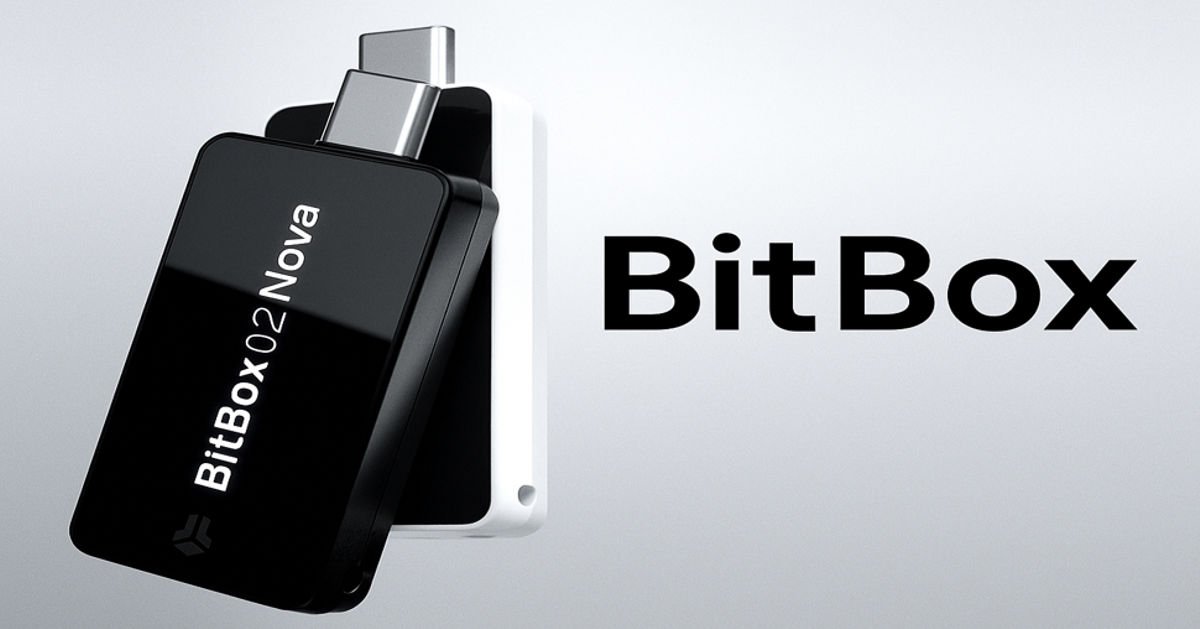
BitBox Announces BitBox02 Nova, A New Hardware Wallet For Bitcoin

BitBox announced today it has launched the BitBox02 Nova, a redesigned hardware wallet built for Bitcoin self-custody, which introduces native compatibility with iOS devices and a new Bluetooth communication system called Whisper.

The device marks a shift from the original BitBox02 by addressing a long standing limitation in its compatibility with iPhones and iPads. Instead of relying on software workarounds, BitBox developed new hardware to meet Apple’s requirements for native support.

“Our customers are at the heart of every decision we make,” said the CEO and co-founder of BitBox Douglas Bakkum. “The BitBox02 Nova embodies this, delivering a cold wallet our customers…

Read more on BitcoinMagazine

South Korea Moves Closer To Approving Spot Bitcoin ETFs

South Korea’s Financial Services Commission (FSC) has submitted plans to introduce spot Bitcoin and crypto ETFs by the second half of 2025, marking a significant shift in the country’s Bitcoin policy amid growing institutional demand for regulated Bitcoin investment vehicles.

According to a report from Yonhap News, the roadmap presented to the Presidential Committee on Policy Planning outlines comprehensive implementation measures for spot Bitcoin and crypto ETFs while establishing robust investor protection frameworks, including custody, operation, and evaluation standards.

South Korea’s move follows the successful U.S. spot Bitcoin ETF launches that have attracted…

Read more on BitcoinMagazine

The CLARITY Act Shouldn’t Be Included In The GENIUS Act Say Senator Hagerty, Analysts

On Tuesday, the U.S. Senate passed the GENIUS Act (S. 394), which would establish a comprehensive federal framework for U.S. dollar-denominated stablecoins.

Now, I know some of you are rolling your eyes because Bitcoin Magazine is covering a stablecoin bill.

To you, I have two things to say:

Firstly, you should still pay attention to crypto bills like the GENIUS Act, because they could impact your ability to use bitcoin privately.

Secondly, the GENIUS Act might get combined with the CLARITY Act (also referred to as the “market structure” bill), which would protect developers and providers of noncustodial Bitcoin tools and services.

With that out of the way… One…

Read more on BitcoinMagazine

Forecasting Bitcoin Price Cycle Peak With The 200-Week Moving Average

As Bitcoin approaches increasingly euphoric territory, the million-dollar question resurfaces of how can we accurately time the cycle’s peak? Most investors either exit too early or ride the market back down after failing to recognize when conditions have shifted. But a deceptively simple tool, the 200-week moving average, may offer critical insights into Bitcoin price trends.

Bitcoin Price Baseline

The 200 Week Moving Average Heatmap has long served as one of the most respected technical reference points in Bitcoin analysis. It smooths out noise by calculating the average closing price across the last 200 weekly candles, effectively tracking Bitcoin’s long-term trend….

Read more on BitcoinMagazine

How Bitcoin Reduces Counterparty Risk In Corporate Treasury Strategy

Bitcoin offers corporations the rare ability to hold pure capital—an asset with no issuer, no counterparty, and no reliance on financial intermediaries. However, these benefits are fully realized only through self-custody, as third-party custodians reintroduce counterparty risk. In an era of rising systemic risk, self-custodied Bitcoin is a strategic asset for de-risking the corporate treasury stack.

Unseen Counterparty Risk in Treasury Reserves

Corporate treasury reserves are designed to ensure liquidity and stability, yet they are quietly vulnerable to systemic risks embedded in traditional financial systems. Most reserve assets—cash, government bonds, commercial…

Read more on BitcoinMagazine

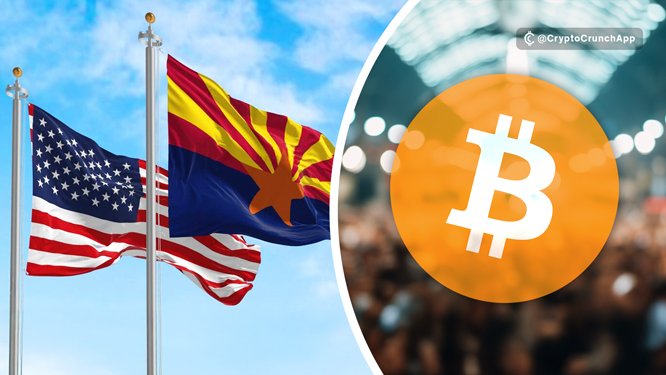
LATEST: Arizona Senate Approves Bill to Create Bitcoin Reserve for State Use

Arizona’s House Bill 2324 has been revived after the Senate voted 16-14 to reconsider the proposal. The bill would allow the state to create a Bitcoin and Digital Assets Reserve Fund funded through seized digital assets in criminal cases. Originally rejected in the House on May 7 the bill will return for a second vote.

If approved the first $300,000 in forfeited crypto would go to the Attorney General’s office. Any amount beyond that would be split equally among the Attorney General the state general fund and the new reserve fund. The bill would also expand Arizona’s laws to permit the seizure and storage of digital assets from cases involving deceased deported or untraceable individuals.

Governor Katie Hobbs has already signed HB 2749 which lets Arizona keep unclaimed crypto and earn rewards without using taxpayer money. While she vetoed two other crypto-related bills citing market volatility she emphasized support for safe crypto adoption through strategic legislation.

Bill Status