

- Crunch
- Global

Christie’s International Real Estate has launched a new division focused on luxury property deals using digital currencies like bitcoin. Buyers and sellers can now complete transactions entirely in crypto, without involving traditional banks. The new unit, led by Aaron Kirman, CEO of Christie’s Southern California, follows several major crypto-backed sales, including a $65 million Beverly Hills property.
The division includes a team of lawyers, analysts, and crypto experts to ensure secure digital transactions. More than $1 billion worth of homes are now listed with sellers open to accepting bitcoin. Properties include the $118 million La Fin mansion in Bel Air, and the $18 million Invisible House in Joshua Tree. Discussions are underway with banks about bitcoin-backed financing options.
This move reflects rising acceptance of crypto in the real estate industry. Federal support is growing, as new laws like the Genius Act and Clarity Act aim to regulate and support digital assets. Kirman believes crypto is here to stay, and expects even greater adoption in the years ahead.

Capital pouring into digital assets has soared to $60 billion so far this year, with inflows jumping nearly 50 percent since May, according to JPMorgan analysts. The surge is fueled by rising crypto fund activity, CME futures trading, and a wave of venture capital fundraising. Analysts believe inflows will surpass last year’s record as momentum continues to build.
JPMorgan’s Nikolaos Panigirtzoglou credits the growing optimism to recent progress in U.S. crypto regulation. The GENIUS Act, now passed by Congress, offers long-awaited clarity for stablecoins and sets a potential global benchmark. Meanwhile, the CLARITY Act, moving through Congress, aims to formally classify digital assets — a step that could attract more crypto-native firms to the U.S. over regions like the EU, which has stricter rules.
Public and private markets are already responding. Crypto venture funding is picking up, Circle’s IPO was a success, and SEC filings are on the rise. Interest in altcoins is also heating up, especially Ethereum, which is gaining ground in DeFi and corporate treasuries.
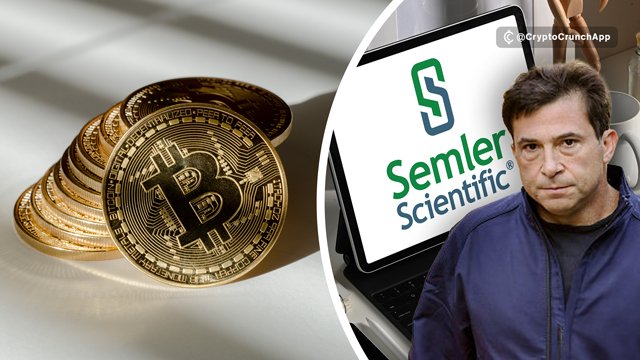
Semler Scientific has acquired 175 Bitcoin for $20.8 million, using proceeds from its recent ATM offering. According to an SEC filing, the average purchase price was $119,230 per Bitcoin. This latest buy brings the company’s total holdings to 5,021 BTC, valued at approximately $595 million as of early Thursday morning.
Bitcoin traded slightly higher at $118,500 in pre-market hours, following a recent all-time high above $120,000. Semler’s stock rose 0.46% in pre-market trading, though retail sentiment on Stocktwits slipped into bearish territory. The company reported a 31.3% year-to-date return on its Bitcoin investment through July 23.
Semler began using Bitcoin as its primary treasury asset in May 2024 and plans to significantly expand its holdings. The company aims to reach 10,000 BTC by the end of the year, 42,000 by the end of 2026, and 105,000 by 2027. It will fund this strategy through a mix of equity, debt, and operational cash flow.
Ghana is set to license cryptocurrency platforms as digital asset adoption continues to surge across the country. The Bank of Ghana is finalizing a regulatory framework, expected to be submitted to parliament by September, according to Governor Johnson Asiama. The initiative aims to capture crypto-related revenue and strengthen control over the national currency.
The cedi has appreciated over 40% against the U.S. dollar in 2025, rebounding from a nearly 20% drop last year. This sharp fluctuation has complicated efforts to manage inflation. Asiama noted that many users are making and receiving crypto payments, which are not recorded in the country’s financial system, posing challenges for economic oversight.
Roughly 17.3% of Ghanaian adults—over 3 million people—own cryptocurrency, according to a June 2024 report by Zawya. Ghana recorded $3 billion in crypto transactions in the year to June 2024, a major share of the $125 billion seen across sub-Saharan Africa, Bloomberg reported, citing Web3 Africa Group CEO Del Titus Bawuah.

Sometimes the best Bitcoin stories start with the worst banking experiences.
For Nicolas Dorier, creator of BTCPay Server, his journey into Bitcoin began not with grand visions of digital money, but with the frustrating reality of being blacklisted by French banks over a measly $1,000 unpaid bill after the failure of his first startup in 2011.
“I tried to create a new business that was just consulting. So like no risk at all and banks would not let me open a bank account,” Dorier recalls of his 2011 experience.
Even when France’s central bank forced one bank to accept him as a customer, the service was deliberately minimal.
“So you don’t have internet…
Read more on bitcoinnews
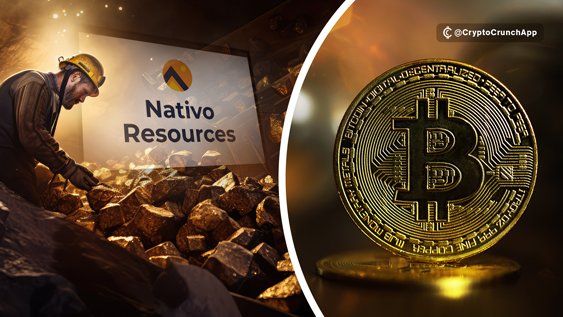
Nativo Resources plc (LON:NTVO), a gold-focused mining company, has announced a new Digital Asset Treasury Policy, marking a significant step into the world of crypto. As it prepares to restart operations at the Tesoro Gold Concession in Peru, the company will allocate a portion of its free cash flow and future fundraising proceeds to Bitcoin, positioning it as a long-term treasury reserve asset.
The company believes combining gold and Bitcoin offers a strong hedge against inflation. Bitcoin’s fixed supply, decentralized nature, and low correlation to traditional markets make it a compelling complement to gold. Nativo may also use Bitcoin for transactions with counterparties, boosting financial flexibility, while remaining focused on primary gold mining, ore processing, and recovery from tailings.
To implement this policy securely, Nativo is partnering with Copper dot co for institutional-grade custody and settlement services, and Nemean Services for digital asset security. Executive Chair Christian Yates said the move helps future-proof the company’s treasury, offering long-term value to shareholders in an evolving global economy.

Tesla’s bitcoin holdings have jumped to approximately $1.2 billion, following a 30% surge in the cryptocurrency’s price during the second quarter. The company holds 11,509 BTC, making it the tenth-largest publicly traded firm with bitcoin on its balance sheet, according to BitcoinTreasuries.Net. Bitcoin is currently trading around $118,000, up from $83,000 on April 1.
Thanks to a new rule by the Financial Accounting Standards Board (FASB), companies can now report the fair market value of crypto assets each quarter. This rule, which took effect in Q1 2025, replaces the older method that required reporting digital assets at their lowest value during the holding period, often ignoring market rebounds.
Tesla can now recognize its bitcoin gains quarterly, giving shareholders a clearer and more accurate view of its digital asset performance. The update is seen as a positive shift for corporate crypto adoption, offering more transparency and encouraging other firms to follow suit.
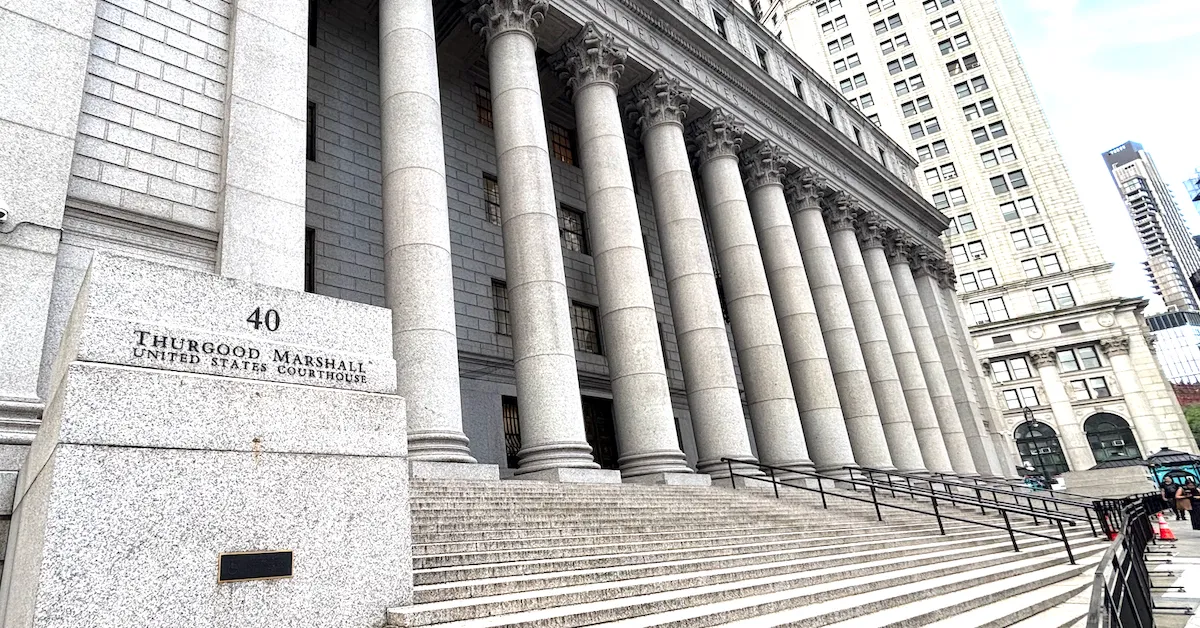
IRS Special Agent Stephan George’s testimony regarding some of Hanfeng Lin’s stolen funds having been put through Tornado Cash seemed credible enough to inhibit the defense from submitting a motion for a mistrial.
On Monday, the defense in the Tornado Cash trial floated the idea of submitting a motion for mistrial after FBI Special Agent Joel DeCapua stated that he hadn’t traced the funds stolen from the first witness in the case, Hanfeng Lin, to the Tornado Cash mixing service.
However, after today’s testimony from IRS Special Agent Stephen George, the second witness that the prosecution called on with the training in tracing assets on public blockchains, the odds of…
Read more on BitcoinMagazine