Transaction URL: https://blockchain.com/btc/tx/95383db289a44836d33c99a3093bb83194cec4f2adf7d98243acd16d090654d7

- Crunch
- Global
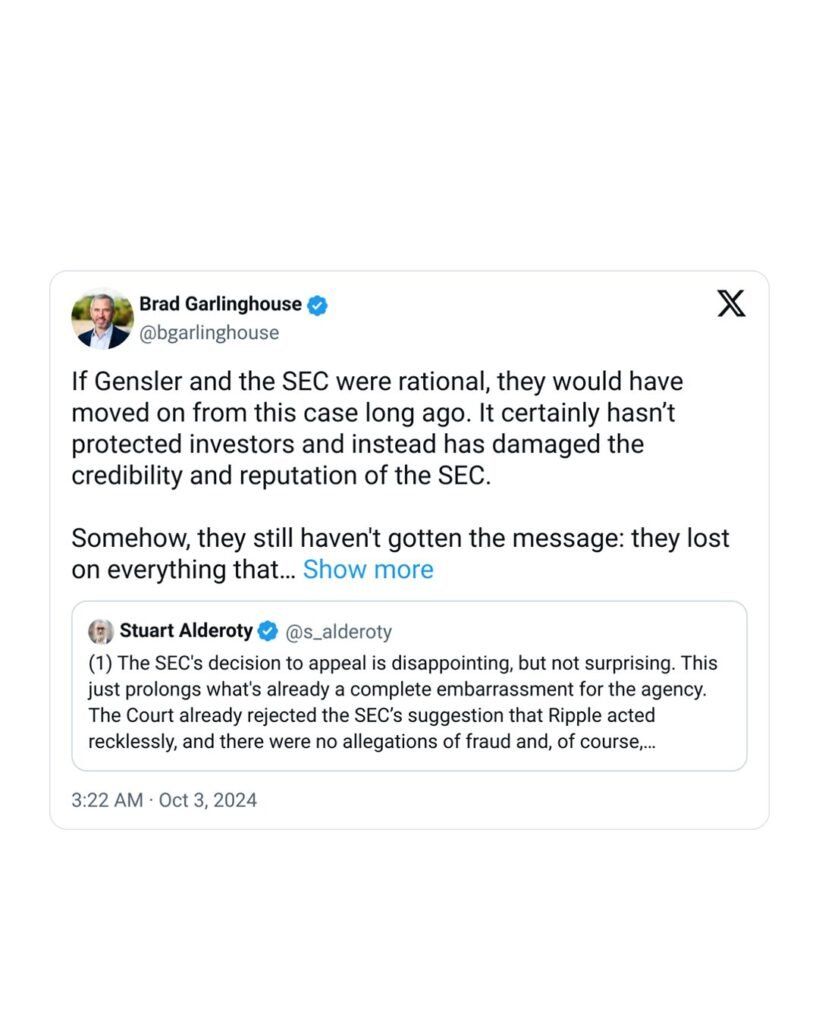
Hold your horses, the battle between the Securities and Exchange Commission and Ripple isn’t quite over yet.
Yesterday, the SEC filed to appeal the $125 million judgment in its case against Ripple.
The case, which is now as old as a human toddler — with its four-year anniversary coming up in December — has been a long and hard-fought court case between the two parties.
Both the SEC and Ripple had until Oct. 7 to decide if they were going to pursue an appeal.
An SEC spokesperson told Blockworks that it filed the appeal because it believes the decision “conflicts with decades of Supreme Court precedent and securities laws.”
Read more: SEC’s enforcement director announces…
Read more on Blockworks

Follow Frank on X.
Last night, I had the distinct pleasure of having an in-depth conversation with Jeff Booth, who I often refer to as the Eckhart Tolle of Bitcoin.
Booth, soft-spoken yet direct, harped on one point in particular in the conversation that, while at first I didn’t grasp, ended up resonating deeply with me.
He said multiple times “We are Bitcoin” in efforts to drive home the point that Bitcoin will continue to work if we continue to make it…
Read more on BitcoinMagazine

Nothing stops this train.
No, I’m not talking about the Federal Reserve money printer, I’m talking about the string of ETF announcements from Wall Street and the related crypto firms servicing it this week.
I’m talking about today’s hybrid Ethereum-Bitcoin ETF, yesterday’s XRP ETF, and what will likely be 2025’s basket memecoin ETF offering exposure to everything from PEPE to GIGA to HarryPotterObamaSonic10Inu.
If you’re takeaway from the arguably dismal ETH ETF launch is that there won’t be more crypto ETFs, I’m sorry but you’re looking past the $1…
Read more on BitcoinMagazine

Japanese investment firm Metaplanet has significantly increased its Bitcoin portfolio through a lucrative options transaction with QCP Capital, a leading Singapore-based digital asset trading firm. The deal involved the sale of 223 put options, netting Metaplanet a substantial 23.97 BTC in premium revenue. This strategic move brings the firm’s total Bitcoin holdings to 530.72 BTC, valued at approximately $32.55 million as of October 3.
The transaction capitalizes on the current Bitcoin market volatility, allowing Metaplanet to generate income while maintaining a cash-secured position. With this latest acquisition, Metaplanet has solidified its commitment to enhancing its Bitcoin reserves, aligning with its financial strategy to bolster long-term exposure to the cryptocurrency.
This approach is part of a broader strategy to address economic challenges exacerbated by the weakening of Japan’s currency since May 2024. By continually increasing its Bitcoin investments, including a major purchase worth $6.94 million, Metaplanet is strengthening its financial foundation amidst growing interest from other Japanese investment managers in the crypto sector.
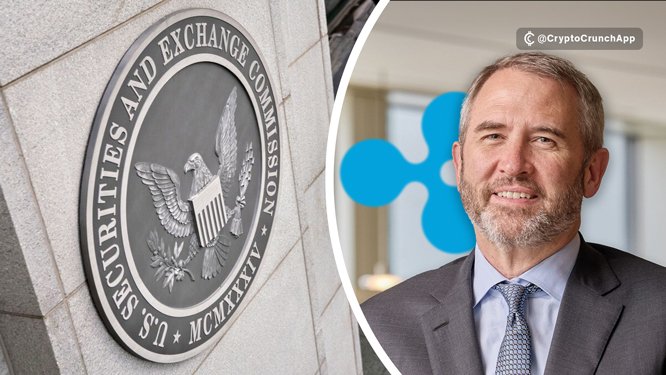
Ripple CEO Brad Garlinghouse has confidently committed to contesting the SEC’s appeal against a court ruling which affirmed that Ripple’s XRP token is not a security. This decision, initially made by New York District Court Judge Analisa Torres, marks a significant victory for Ripple, despite the SEC’s continued challenges. Garlinghouse criticized the SEC’s decision to appeal, highlighting the clarity of the original ruling which clearly supports the crypto community’s stance.
In an enduring commitment to legal clarity, Ripple’s leadership remains undeterred by the SEC’s latest legal move. “The law today recognizes XRP’s status as a non-security. This misguided appeal will not alter that fact,” Garlinghouse stated. The Ripple team, supported by Chief Legal Officer Stuart Alderoty, is prepared to defend this position throughout the appellate process, emphasizing the lawsuit’s lack of merit since its inception in 2020.
The legal proceedings are expected to extend until early 2026, with the Second Circuit Court not likely to issue a ruling before then. Despite this, Ripple’s legal team is ready to submit further briefs and engage in oral arguments as necessary, reinforcing their readiness to once again prove their case in court.