

- Crunch
- Global

Federal Reserve Vice Chair for Supervision Michelle Bowman announced a major policy shift supporting digital assets at the Wyoming Blockchain Symposium on August 19. She confirmed that reputational risk considerations were removed from bank supervision in June, clearing a path for financial institutions to work with crypto firms engaged in legal activities without fear of regulatory penalties.
Bowman unveiled a four-principle framework to guide the Fed’s new approach: regulatory certainty, tailored rules, consumer protection, and boosting U.S. competitiveness. She stressed that crypto companies should not be driven away by unclear oversight, and banks should have the freedom to serve lawful businesses. The policy aims to integrate blockchain into traditional finance while safeguarding compliance and consumer rights.
Highlighting blockchain’s potential to reduce costs and settlement risks, Bowman urged greater collaboration between regulators and industry leaders. She warned that without clear rules, innovation could bypass the banking system, threatening its long-term relevance in global finance.
This is a segment from The Breakdown newsletter. To read more editions, subscribe
“We are what we repeatedly do.”
— Aristotle
Central banks are buying gold in the 21st century for the same reason Romans bought it in the first: It has value because people perceive it to have value.
That circular logic has proved so durable that the purchasing power of gold is virtually unchanged since antiquity.
In that sense, central banks are buying gold now because Romans were buying it then.
Perception has become reality through repetition.
The bet with crypto is that it can pull off the same trick, but faster — compressing millennia of belief into a few short…
Read more on Blockworks
Skeptics of Ethereum’s rollup-centric roadmap have speculated that layer-2 networks might eventually peel away from the ecosystem. The concern was that rollup teams would grow tired of paying Ethereum’s data availability fees and break off into sovereign layer-1 chains with their own validators.
But so far, that hasn’t happened. Instead, the gravitational pull has flowed the other way: independent layer-1s are re-architecting themselves as Ethereum L2s.
Celo and Lisk are two prominent examples. Celo launched in 2020 aiming to build a mobile-first, payments-centric L1 with its own stablecoins and identity layer. Lisk’s origins go back even further to 2016, when it launched…
Read more on Blockworks
This is a segment from the Lightspeed newsletter. To read full editions, subscribe.
The decentralized wireless company Helium is planning to funnel 100% of Helium mobile subscriber revenues to HNT token burns, co-founder and CEO Amir Haleem tweeted yesterday.
It’s not clear if Helium plans to buy HNT on the open market or simply burn tokens from its treasury, but the initiative is going into effect “this week, barring any weird logistics,” he said.
In any case, that’s an estimated $2.3 million in monthly gross revenues offchain that otherwise would have gone to Helium’s parent company, Nova Labs, now being redirected to HNT token holders.
HNT is Helium’s…
Read more on Blockworks
KindlyMD has made its first significant Bitcoin acquisition since completing its merger with Nakamoto Holdings, purchasing 5,743.91 BTC for approximately $679 million as part of its ambitious plan to accumulate one million Bitcoin.
The healthcare services provider, which recently transformed into an institutional-grade Bitcoin treasury vehicle, executed the purchase at a weighted average price of $118,204.88 per Bitcoin. The acquisition brings the company’s total holdings to 5,764.91 BTC, establishing KindlyMD as a significant player in the growing corporate Bitcoin treasury space.
“This acquisition reinforces our conviction in Bitcoin as the ultimate reserve asset for…
Read more on BitcoinMagazine

SoFi (NASDAQ: SOFI) is set to roll out an international money transfer service later this year, making it one of the first U.S. banks to adopt blockchain technology for remittances. The service will allow members to send money abroad directly through the SoFi app with lower fees, faster delivery, and full transparency on exchange rates and costs.
Powered by Lightspark’s infrastructure and the Bitcoin Lightning Network, the feature will use Universal Money Address (UMA) to enable seamless global payments. This move places SoFi at the forefront of digital banking innovation, unlocking faster, smarter, and more inclusive financial access for its members. CEO Anthony Noto emphasized the significance of reducing costs for customers who regularly send money to loved ones overseas.
Lightspark co-founder David Marcus praised SoFi’s leadership, noting that UMA enables instant, low-cost transfers on Bitcoin’s open payments network. With around-the-clock availability and one of the lowest costs in the market, SoFi aims to set a new standard for international money transfers.

KindlyMD, Inc. (NASDAQ: NAKA) has announced a major leap into crypto markets with the purchase of 5,743.91 Bitcoin through its subsidiary Nakamoto Holdings, Inc. The acquisition, valued at approximately $679 million, marks the company’s first Bitcoin buy since completing its merger. With this move, KindlyMD’s total Bitcoin holdings now stand at 5,764.91 BTC.
The company confirmed the Bitcoin was purchased at a weighted average price of $118,204.88 per coin using PIPE proceeds. Management emphasized this step as part of a disciplined long-term Bitcoin treasury strategy. The ultimate goal is to accumulate one million Bitcoin under the Nakamoto Bitcoin Treasury, positioning the firm as a leader in institutional Bitcoin adoption.
CEO and Chairman David Bailey said the purchase reinforces their strong belief in Bitcoin as the “ultimate reserve asset.” He added that the company is committed to building a transparent and trusted vehicle for corporations and institutions, while anchoring the next era of global finance with Bitcoin at its core.
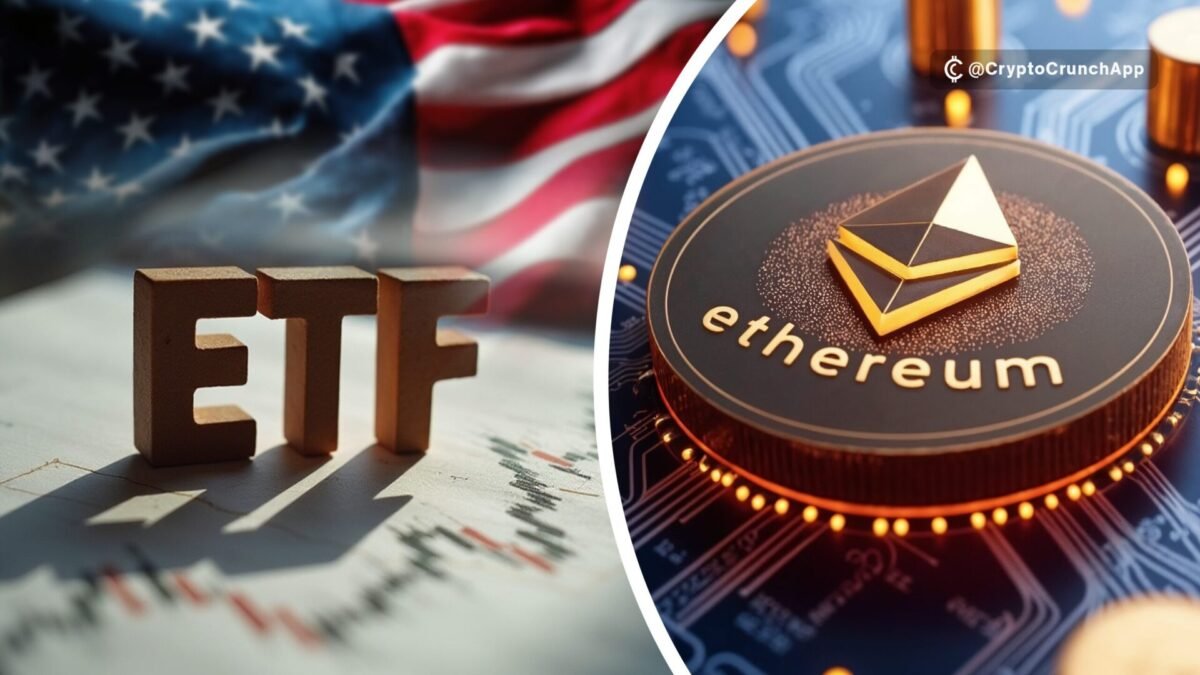
U.S. spot Ethereum exchange-traded funds (ETFs) now hold over 5% of the circulating ETH supply, underscoring the growing influence of crypto investment products. On-chain data shows that Ethereum ETFs collectively hold 6.3 million ETH, worth $26.7 billion, representing 5.1% of total supply.
Monday saw a sharp reversal with $196.6 million in net outflows, the second-largest single-day withdrawal since launch. Despite this setback, Ethereum ETFs had previously recorded an impressive eight-day inflow streak, attracting $3.7 billion overall. Last week alone, net inflows surged to $2.85 billion, significantly higher than the $325.8 million logged the week before.