Bank Of Russia To Allow Limited Bitcoin Operations For Banks

The Bank of Russia will reportedly allow domestic banks to conduct limited crypto operations under tight regulatory oversight — a cautious but notable step toward integrating bitcoin and other digital assets into the country’s financial system.

First Deputy Chairman Vladimir Chistyukhin announced the decision during the Finopolis fintech forum this week. He emphasized that while the central bank remains conservative on decentralized assets like bitcoin, it recognizes the growing role of crypto in the modern economy.

“We hold conservative views and think about how appropriate it is for the banking sector to include cryptocurrency in its assets,” Chistyukhin reportedly…

Read more on BitcoinMagazine

Morgan Stanley opens crypto fund access to all wealth clients

Morgan Stanley will lift all restrictions on which of its wealth management clients can invest in cryptocurrency funds, the firm told financial advisors on Friday, according to a CNBC report.

Beginning October 15, financial advisors will be able to recommend bitcoin and ether investment products to any client, including those using retirement or trust accounts. Previously, such access was reserved for investors with over $1.5 million in assets and an “aggressive” risk profile.

The policy change comes amid a broader recalibration in US financial regulation toward digital assets following the 2024 election of President Donald Trump. Morgan Stanley, which oversees about $8.2…

Read more on Blockworks

Kalshi raises $300M at $5B valuation

Kalshi, the US-regulated prediction market operating under Commodity Futures Trading Commission (CFTC) oversight, has raised $300 million in new funding at a $5 billion valuation, according to The New York Times on Friday.

The company allows investors to trade on the outcomes of real-world events—from elections to inflation data—and has increasingly attracted both institutional and crypto-native traders seeking regulated exposure to event-based markets.

The platform, founded in 2018 by Tarek Mansour and Luana Lopes Lara, operates legally under the CFTC’s designated contract market status, distinguishing it from decentralized or offshore prediction venues that lack regulatory…

Read more on Blockworks

Russia’s central bank to allow limited crypto activity by banks

The Bank of Russia will allow domestic banks to engage in limited cryptocurrency operations under stringent oversight, marking a controlled step toward crypto integration in the country’s financial system.

First Deputy Chairman Vladimir Chistyukhin announced the move at the Finopolis fintech forum, noting that while the central bank remains conservative on decentralized assets like Bitcoin, it recognizes the need to align with market realities.

Chistyukhin stated that the Bank of Russia will impose strict requirements on participating institutions to ensure crypto does not become a dominant banking activity. A draft framework would reportedly cap crypto exposure at 1% of a…

Read more on Blockworks

LATEST: Bitmine Adds Massive $104 Million In Ethereum To Its Treasury, Onchain Data Confirms

BitMine Immersion Technologies (BMNR) has reportedly acquired 23,823 ETH worth $103.7 million, according to on-chain data flagged by Lookonchain. The transfer came from a BitGo wallet, though BitMine has yet to confirm the purchase. Officially, the firm now holds 2.83 million ETH—valued at $12.4 billion—cementing its position as the largest Ethereum treasury and second only to Michael Saylor’s Bitcoin-focused Strategy.

The company, led by Fundstrat co-founder Tom Lee, has repeatedly emphasized its long-term goal of controlling 5% of Ethereum’s total supply. Despite the news, BMNR stock fell 1.5% Thursday to $59.10, while ETH itself slipped 1.4% to $4,384. The move highlights BitMine’s strategy of backing Ethereum as a cornerstone for future financial market services.

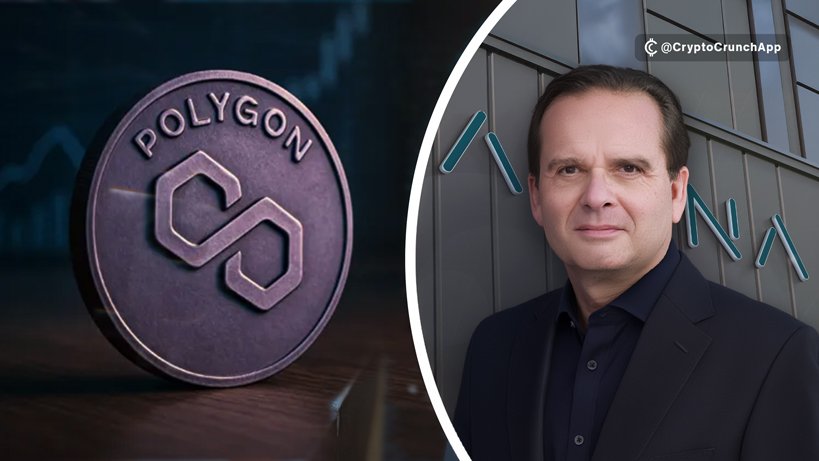
Polygon is simultaneously emerging as a hub for institutional tokenization and payments, with major firms such as Stripe, J.P. Morgan, Franklin Templeton, and Santander leveraging its low-cost, fast-settlement blockchain. With POL staking led by AMINA Bank, institutions are moving beyond passive exposure to active participation, signaling a deeper shift in traditional finance toward Web3 adoption.

 Data

Roger Ver reaches $48M tax settlement with US prosecutors: NY

Roger Ver, the early Bitcoin investor and Bitcoin Cash promoter known as “Bitcoin Jesus,” has reached a tentative $48 million settlement with the US Justice Department to resolve criminal tax fraud charges filed in 2024.

The agreement, first reported by The New York Times and still pending court approval, would drop charges if Ver meets all payment and compliance terms. The case underscores a marked shift in federal crypto enforcement under President Donald Trump’s second administration, which has eased pressure on high-profile industry figures after years of scrutiny under President Joe Biden.

Ver, 46, was accused of evading taxes linked to his digital asset holdings while…

Read more on Blockworks

Bitcoin Price Slumps But Analysts Eye $180,000 Price Target

Bitcoin price was holding steady near the $120,000 mark today but recently slumped below that mark to $119,768. All this movement is after a volatile and bullish start to October.

Some analysts point to signs that the market has entered what many describe as the “euphoria phase” of the current bull cycle.

Bitcoin price surged more than 30% since the start of the year, buoyed by sustained inflows into U.S.-listed Bitcoin exchange-traded funds, renewed investor confidence in digital assets, and expectations that the Federal Reserve will move toward cutting interest rates. 

Bitcoin price briefly touched above $126,000 earlier this week — its highest ever — before easing…

Read more on BitcoinMagazine

LATEST: AMINA Bank Rolls Out Regulated Polygon (POL) Staking For Institutional Clients

AMINA Bank AG, a Swiss FINMA-regulated crypto bank, has become the first bank globally to offer institutional staking for Polygon’s native POL token. This milestone gives institutional investors a fully compliant path to earn up to 15% yield through a partnership with the Polygon Foundation, significantly boosting standard staking rewards.

By introducing a regulated staking model, AMINA bridges traditional finance with blockchain-native returns at a time when Polygon leads global payment activity. The network commands over 30% of all sub-$100 transactions across EVM chains, supports $3.4 billion in stablecoins, and dominates emerging markets with 90% of stablecoin usage. AMINA’s offering strengthens Polygon’s network security while meeting strict Swiss KYC and AML standards.

The move signals growing institutional engagement in Web3, as banks, asset managers, and fintech leaders integrate Polygon for tokenization and payments. With AMINA’s regulated staking debut, institutional staking-as-a-service officially enters mainstream finance.

Source

Kraken expands CME derivatives access to oil, gold and FX

Crypto exchange Kraken is expanding access to traditional derivatives markets by connecting U.S. traders directly to CME Group’s futures products, including energy, metals, equities, and foreign exchange.

Originally reported by the Block on Thursday, the company confirmed that its regulated futures commission merchant, Kraken Derivatives US, will facilitate trading in CME contracts such as oil, gold, silver, the S&P 500, and other major FX pairs like EUR, GBP, and JPY.

The move marks a significant step in Kraken’s push to bridge digital and traditional finance, positioning it alongside brokerages such as Robinhood, which have also expanded into conventional asset…

Read more on Blockworks

Institutions Plan To Double Bitcoin And Crypto Exposure By 2028, State Street Research Finds

Institutional adoption of digital assets — like bitcoin — is booming, with average portfolio exposure expected to double from 7% to 16% within three years, according to new research from State Street. 

State Street’s study touched on how tokenization and blockchain technology are moving from experimentation to execution across global investment portfolios.

The study surveyed senior executives across asset management, trying to decipher how institutions are integrating digital assets, tokenization, and emerging technologies like AI and quantum computing into their strategies. 

Nearly 60% of respondents plan to increase digital asset allocations over the next year,…

Read more on BitcoinMagazine