Transaction URL: https://whale-alert.io/transaction/solana/575e8k8YSotDVUxuWjvD3zko3Q8VnidfS1w1DnLHakxpsatwdKpc2qsdnEsxkGbi3dm4oWjiAjq4DXGV16bC2Hii

- Crunch
- Global

Semler Scientific, a healthcare company, has expanded its Bitcoin holdings to 929 BTC after purchasing an additional 101 BTC, the company announced in a recent press release. As part of its strategic shift towards Bitcoin integration in its treasury operations, Semler has invested $63 million in the cryptocurrency since May. CEO Doug Murphy-Chutorian emphasized the firm’s dual focus on enhancing healthcare services while strategically growing their Bitcoin reserves.
The company’s bullish stance on Bitcoin continues to draw positive market reactions. Chairman Eric Semler expressed confidence in Bitcoin’s value as an investment, revealing plans for further acquisitions funded by operational cash flow and a $150 million shelf registration sale. This approach mirrors strategies employed by tech firms like MicroStrategy, which have successfully harnessed Bitcoin investments to revitalize and drive growth.

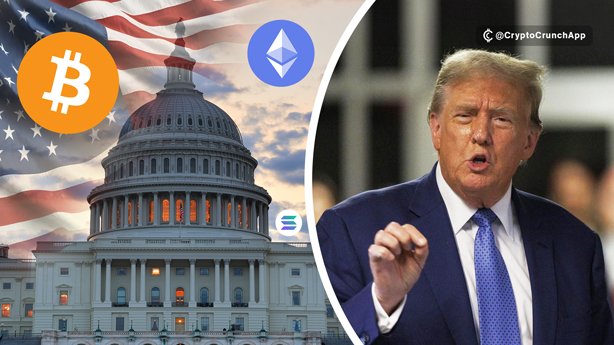
During a recent interview, Republican presidential nominee Donald Trump reiterated his support for cryptocurrency. Trump criticized the U.S. government’s recent sale of $2 billion worth of bitcoin, arguing that the U.S. should be building its crypto assets instead. He emphasized the importance of staying competitive, noting that other countries, particularly China, are advancing in the crypto space. Trump likened cryptocurrency to artificial intelligence, underscoring its significance in the technological landscape.
The former president has shifted his stance on cryptocurrency, now advocating for the U.S. to become a “Bitcoin mining superpower.” Trump’s appearance at Bitcoin 2024 in Tennessee last month bolstered his re-election campaign, reportedly raising $21 million. As the government continues to hold about $11.1 billion worth of crypto, the market remains influenced by political developments. Trump’s pro-crypto position and his comments during the interview reflect a broader acceptance and strategic consideration of digital currencies in the U.S. economic framework.
