Transaction URL: https://etherscan.io/tx/0x6c72b19d207f3b144db73fc2bb6a8faf4f37537a90c7146ba3570ae37bcd289b

- Crunch
- Global
This is a segment from the Empire newsletter. To read full editions, subscribe.
You’ve probably heard by now that ETH is a cursed asset. Doomed.
Maybe you’ve read tweets that say Ethereum is destined to go the way of Intel — a stock that has collapsed in value by two-thirds over the past five years while competitors (Nvidia and AMD) have thrived by comparison.
It’s a take that only works if you focus solely on price and ignore how much activity persists on Ethereum and its surrounding web of layer-2s and layer-3s.
Ether has only gained 30% in the past year while its direct rival, SOL, has about doubled.
Even XRP has easily beaten ETH over the bull market to…
Read more on Blockworks
Digital Asset staking has a problem.
Major institutional players increasingly want to participate, but most of today’s staking providers aren’t regulatory or enterprise-friendly. The status quo is infrastructure pieced together by small, sometimes inexperienced teams on centralized Big Tech clouds that are not tuned for digital assets – nor engineered to meet the regulatory compliance standards that major players like BlackRock demand. The traditional financial world has long-established standards for robust risk management strategies crucial to fulfilling institutional needs, and their service providers in the decentralized financial world must meet these requirements.
And…
Read more on Blockworks

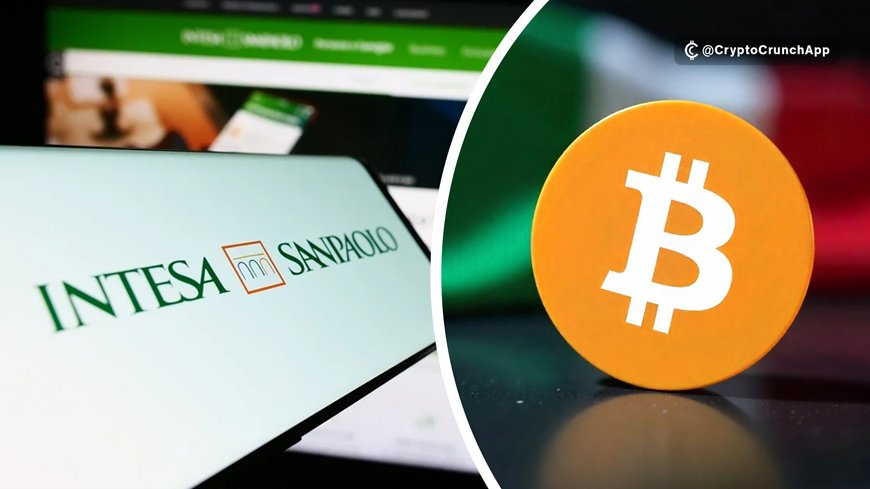
Intesa Sanpaolo, the premier bank in Italy, made headlines with a bold leap into the cryptocurrency market, purchasing 11 bitcoins for $1 million. On January 13th, this groundbreaking transaction occurred at 11 a.m. CET, marking the bank’s initial foray into Bitcoin with the price per coin standing at around $92,800. This move could signal a changing tide in the regulatory landscape for cryptocurrencies in Italy.
According to a leaked internal email from Niccolò Bardoscia, Head of Digital Assets Trading & Investments at Intesa Sanpaolo, this investment is just the starting point. The bank’s venture into Bitcoin reflects a growing acceptance and could potentially catalyze further institutional engagement across Italy and beyond. Currently, over 1.4 million Italians hold cryptocurrencies, collectively valued at €2.2 billion.
Despite recent government plans to hike taxes on crypto gains, public pushback has kept rates steady, aligning with those of stock market gains. This could set a favorable stage for continued investment in cryptocurrencies. With Italy’s largest bank now officially in the game, even skeptical investors might be swayed to explore this burgeoning sector.